
The Living Earth, Part 1: “The Gaia Hypothesis”
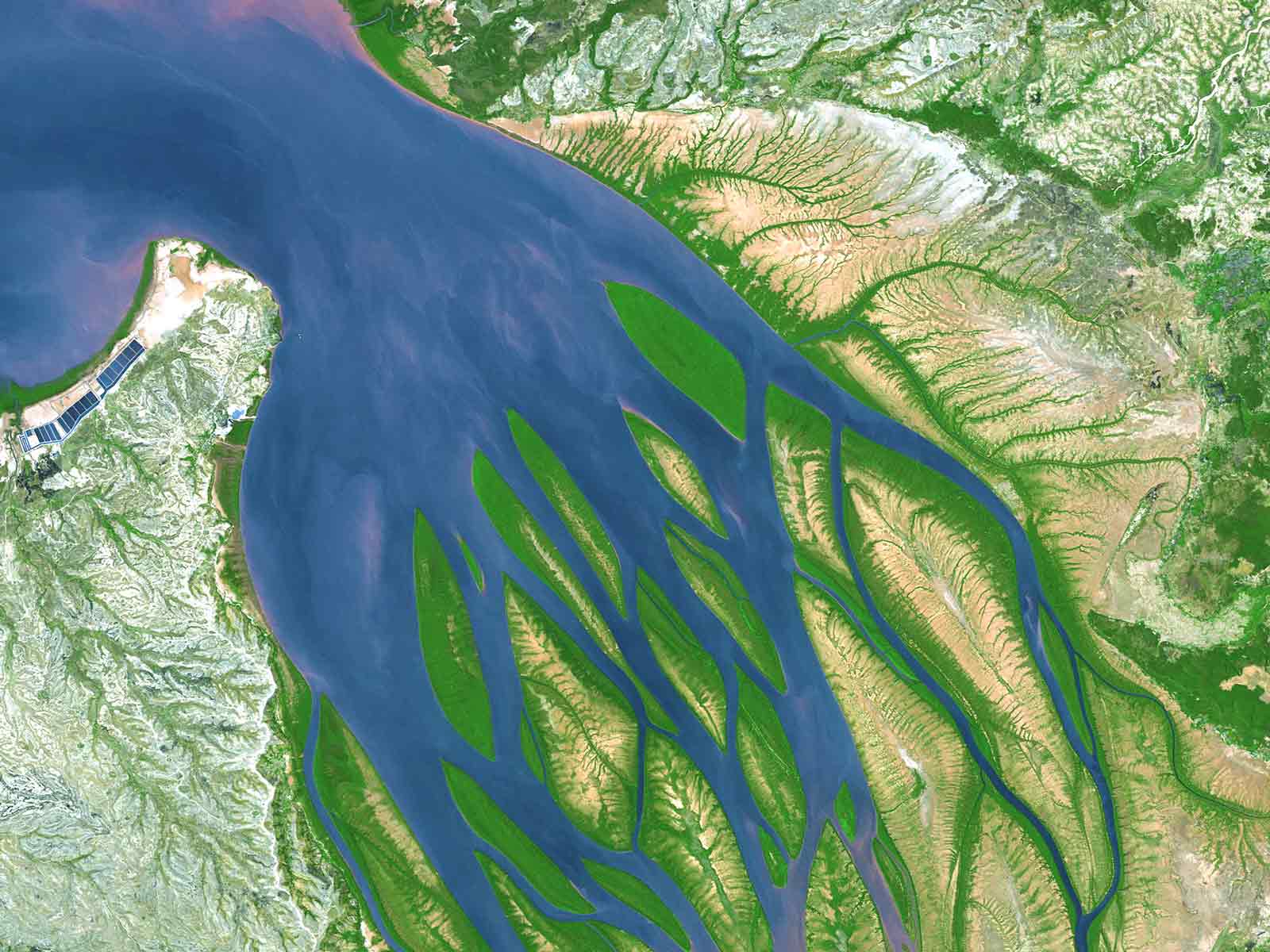
Something shifted in me the day my 8th grade Earth Science teacher projected our blue marble planet floating in space on the big screen. I immediately and stunningly knew the Earth was a living presence—a she, not an it.
Years later, in college, I majored in Environmental Science. When my professor introduced us to the Gaia hypothesis, I was completely fascinated. Here was science confirming what I had realized in 8th grade.
In the 1960s, James Lovelock was a scientist working in NASA’s planetary explorations program. His job was to ask big picture questions about what makes a planet habitable, and specifically, what has made the Earth habitable for billions of years.
He gathered data on the Earth’s surface temperature, atmosphere, and oceans, and found something puzzling. This planet’s conditions have remained stable enough to support life for a very long time, even while internal and external conditions have changed.
When he considered this as if viewing the planet from outer space, it didn’t seem possible—unless it was being actively maintained from the surface.
He intuited that the Earth is alive.
As he continued to research this remarkable insight, he formed a hypothesis:
“The idea of the Earth as a kind of living organism, something able to regulate its climate and composition so as always to be comfortable for the organisms that inhabited it . . ..”
Lovelock’s Gaia is the entire region where life exists on this planet. He considered the whole of the land, the plants, the rivers, the oceans, the air as one living planetary “organism” that regulates its own environment. He called this living organism Gaia, after the Greek Earth goddess, and the Gaia hypothesis was born.
All of life on Earth is Gaia—the planet’s body.
This planet has been habitable for three billion years, and it’s not by random cosmic accident or lucky positioning relative to the sun. It’s the result of a living system—a vast network of biophysical feedback loops that constantly stabilize the ever-changing environment.
The Earth’s body is similar to our own. It adjusts automatically to maintain an optimal balance, just like our bodies breathe, sweat, and fight infections without our having to think about it.
We don’t live on a passive, inanimate rock floating through space. We live within a planetary-scale web of life that consistently sustains the conditions that allow us to be here. According to Lovelock, Gaia makes this planet habitable for all of her life forms.
To understand how this global body operates, we need to look at the improbabilities she maintains.
Continue the series: “Earth’s Improbable Balance”
Sources:
- Gaia: A New Look at Life on Earth, James Lovelock
- We Belong to Gaia, James Lovelock