
Ocean As Mother
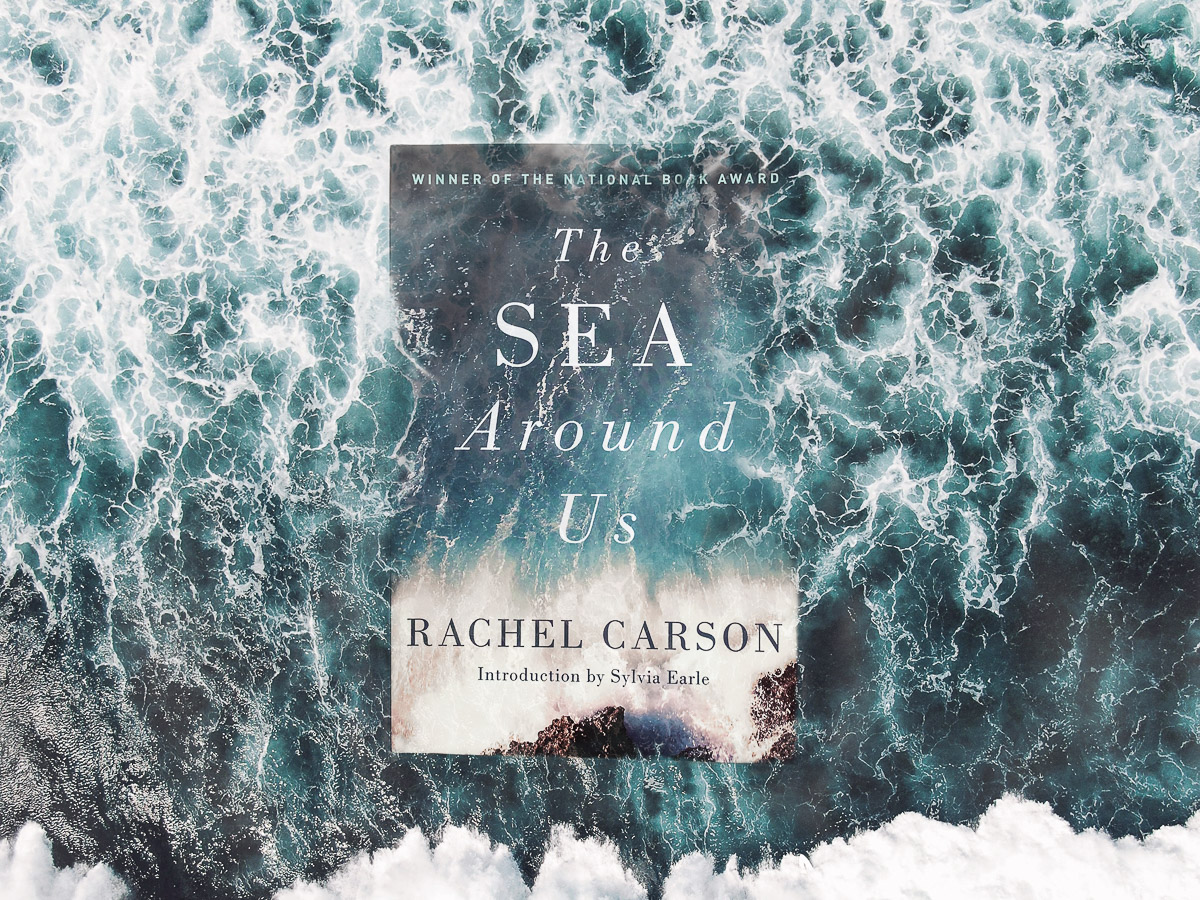
Rachel Carson has forever changed the way I see the ocean, and I’m not sure how she did it.
I was planning to give you some passages depicting the ocean as a mother: who unceasingly circulates her bodily currents across distant shores and open seas, from lightless deep to windswept surface; all in service to the seasonal birthing and nurturing of the myriad marine species she harbors within the whole of her being—but I couldn’t find any.
Or at least, I couldn’t find more than a few direct references. And the ones I did find were very short mentions of “the sea’s first children,” “their all-providing, all-embracing mother sea,” and this:
“And as life itself began in the sea, so each of us begins his individual life in a miniature ocean within his mother’s womb …”
After searching The Sea Around Us for quotes, I’ve concluded that she didn’t tell me the ocean was a mother as much as she showed me. Carson writes with such reverence and intimate attention to the sea’s cycles and currents and life-giving capacity that she invited me to perceive it (her) that way for myself.
“The permanent currents of the ocean are, in a way, the most majestic of her phenomena.”
Reading chapter after chapter of her beautifully lyrical scientific descriptions of life in and around the ocean, I began to understand that the ocean wasn’t the separate named bodies we’re taught—the Atlantic, Pacific, Indian—but one interconnected whole. The boundaries we’ve drawn on our maps are human constructs. The ocean herself flows as one vast being.
“There is, then, no water that is wholly of the Pacific, or wholly of the Atlantic, or of the Indian or the Antarctic. The surf that we find exhilarating at Virginia Beach or at La Jolla today may have lapped at the base of Antarctic icebergs or sparkled in the Mediterranean sun, years ago, before it moved through dark and unseen waterways to the place we find it now. It is by the deep, hidden currents that the oceans are made one.”
A living maternal presence that endlessly circulates the entire planet—holding the intention to birth, sustain, and connect all of life.
Rachel Carson is most famous for writing Silent Spring, the book that simultaneously ended DDT production in the U.S. and sparked the entire environmental movement in the 1960s. (A must-read, if you haven’t already.) As a marine biologist, though, her real passion was for the ocean and that comes through clearly in The Sea Around Us. It’s an entirely lovely, though scientifically dated, read if you’re wanting to feel a relationship with the ocean.
Thanks to her writing, the ocean will never again be just a body of water to me. In my mind, the ocean is a mother.