
It took science over 30 years to publicly recognize James Lovelock’s idea of the Earth as a living, self-regulating organism. But today, the Gaia hypothesis is accepted as Gaia theory, so Lovelock’s 1960s insight eventually proved sound.
The Gaia hypothesis, now Gaia theory, tells us:
The entire surface of this planet acts as one giant superorganism;
a living entity with the goal of making this planet comfortable for all of life.
In the following series, I explore James Lovelock’s scientific theory
and how it helps to explain the indigenous Mother Earth.
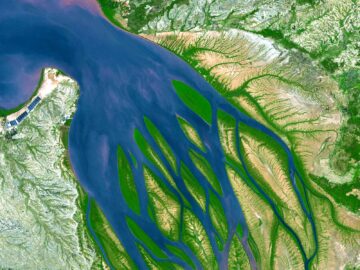
The Gaia Hypothesis, Part 1
As a budding environmental science major in the 1990s, the Gaia hypothesis is one of the first concepts I remember learning. It was formulated in the 1960s by James Lovelock, a scientist working in NASA’s planetary exploration program. The hypothesis proposes: “The idea of the Earth as a kind of living organism, something able to…
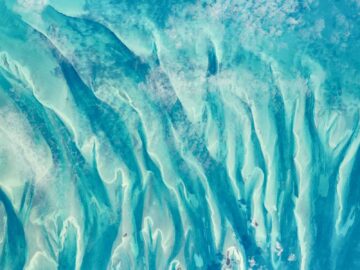
The Gaia Hypothesis, Part 2
In part 1 of this Gaia hypothesis series, we left off with the question: What led Lovelock to suspect this planet wasn’t just a rock floating through space? At NASA, James Lovelock looked at ways to detect life on Mars by atmospheric analysis. He and a partner used Earth as a model and combined data…
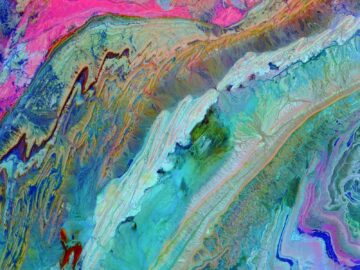
The Gaia Hypothesis, Part 3
In part 2 of this Gaia hypothesis series, we ended with the question: How to prove that Mother Earth lives? I like this question because it’s provocative, and it’s paraphrased from James Lovelock’s writing. It is, however, the only time I noted him to mention Mother Earth. Lovelock was a proper scientist who wrote his…
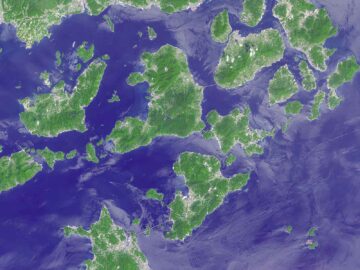
The Gaia Hypothesis, Part 4
In the first 3 parts of this series, we learned what the Gaia hypothesis (now Gaia theory) is; what led James Lovelock to realize this planet’s environment was being controlled from the surface; and how Gaia uses life to keep this planet comfortable. In case you missed them: part 1, part 2, part 3 Now…
* All images courtesy of NASA