
Life Lessons From a Horse
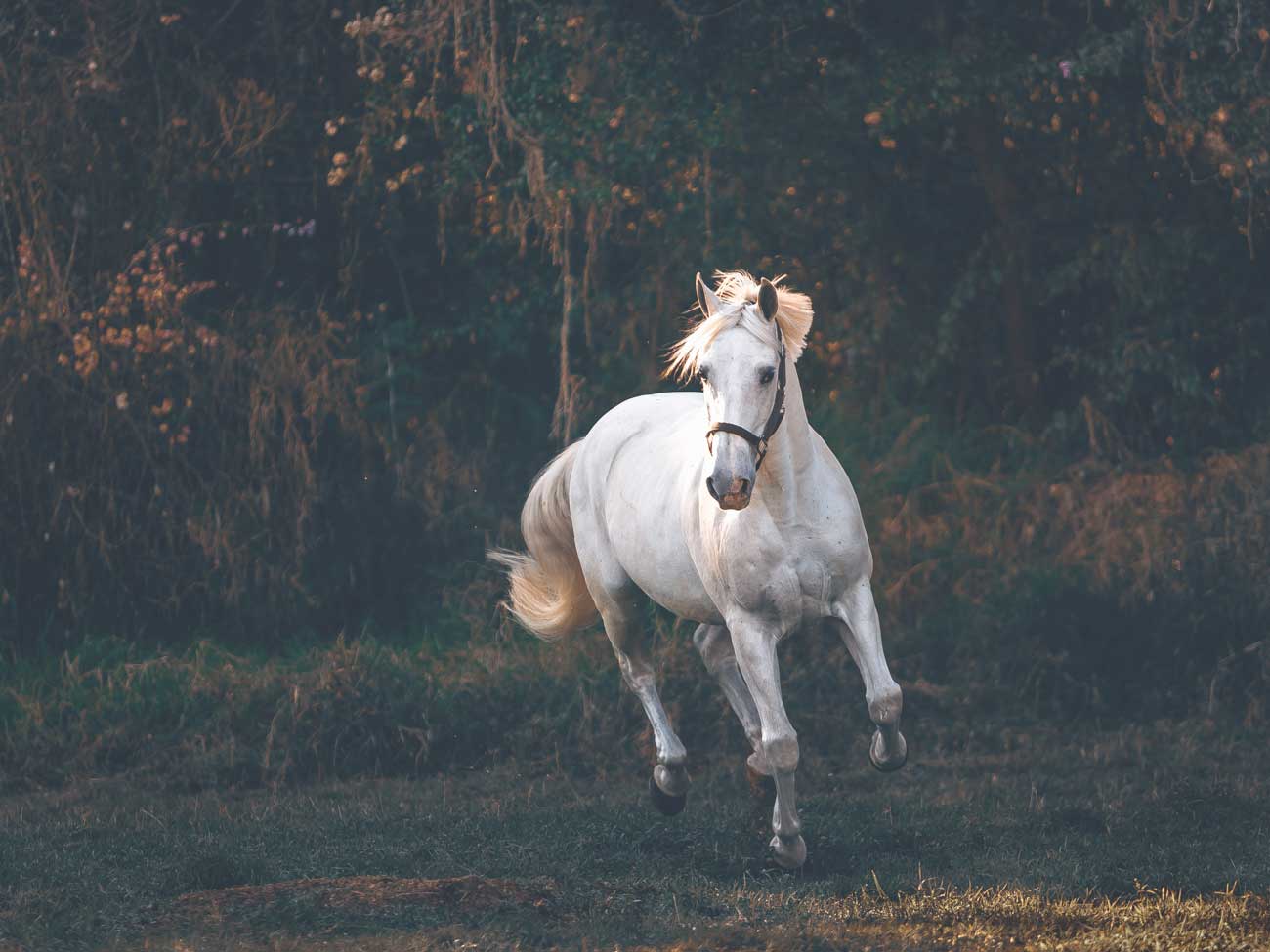
I can still hear my riding instructor’s voice as I started to trot for the first time. “Head up,” she called out. “Look where you want to go.”
She told me later she had to give that same instruction to all of her beginning riders. After many years of teaching, the instinct to look down still puzzled her. Only a few months into my lessons, I understood it completely.
Of course I wanted to look down. I was eight feet off the ground on a 1,000 pound animal—and it was running. My body was flying up and down in the saddle, and I wanted to know that I was still attached to the animal beneath me.
Instinct told me to look at the horse’s body, my legs, and the ground beneath me.
My instructor told me this was the most unsafe thing I could do.
When you look at the ground, your body is off balance in the saddle, and you’re essentially telling the horse, “I don’t know where we’re going. You decide.” Now you’re letting the horse take you for a ride, and you’re in greater danger of falling off.
With practice, you learn to always be looking in the direction you want to go next. With your whole head, not just your eyes.
Horses are highly sensitive to subtle body language cues. When you turn your head to the right, your hips move, your weight shifts, and the horse feels that. He knows what to do next. You use the reins to direct him too, but you can be gentle with them, which is easier on the horse’s mouth and neck.
Now you’re riding the horse, not the other way around.
What if life works this way too?
Instinct says we’re safe when we pay attention to what’s happening right where we are. To the place our past decisions, or other people’s priorities, or the news reports have led us. But what if we want to go somewhere different, somewhere better?
What if life is sensitive like the horse and waiting for us to tell it where to go?
The safest thing just might be to practice looking out beyond where we are right now. Maybe that means telling a new story about where we’re going, and keeping our heads turned that way. Letting our attention shift to those decisions, those priorities, those expectations.
Maybe our instincts need to be retrained.
So we can lead life in the direction we want to go, not the other way around.