
Tree People
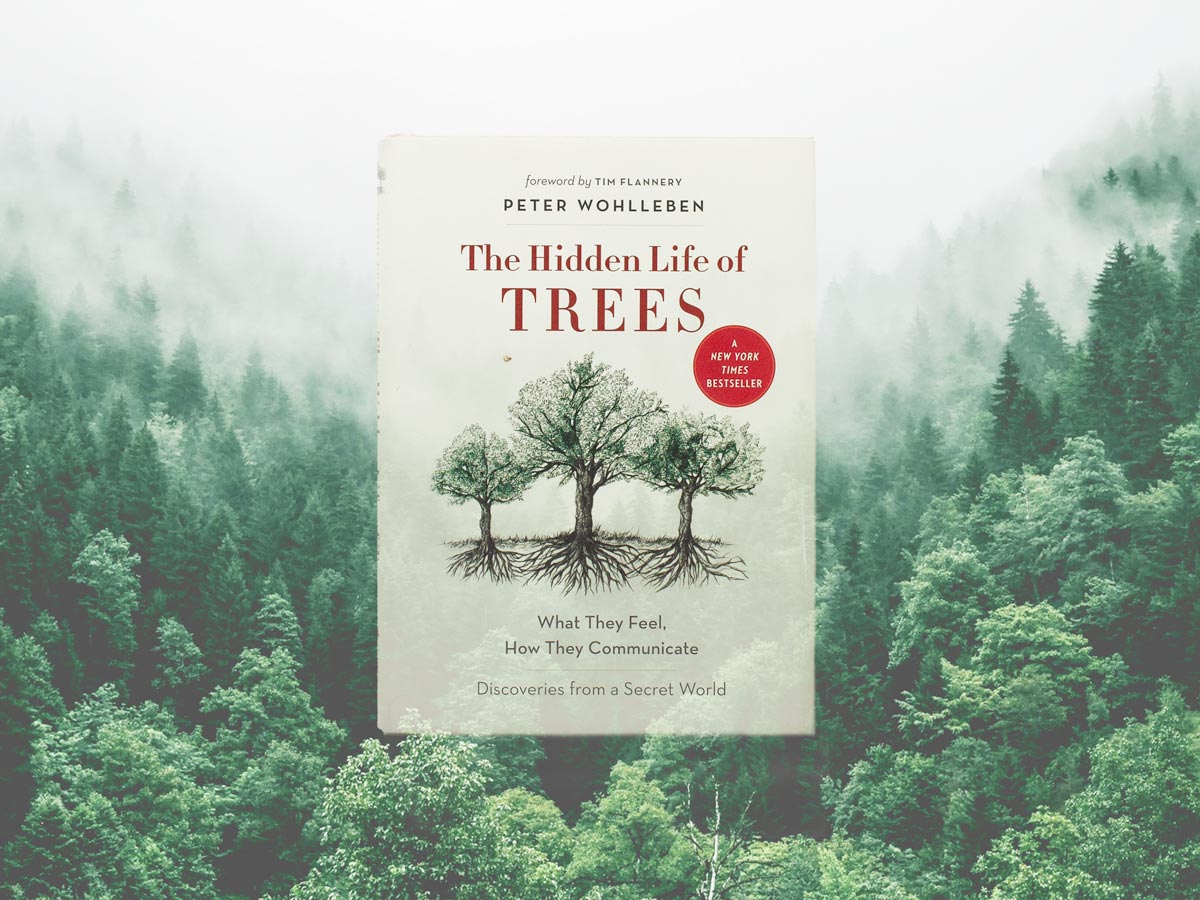
When Peter Wohlleben went to forestry school, he learned that trees are resources to be managed for maximum commercial value. The forestry industry likes them tall, straight, and regularly spaced—easy to cut and easy to sell. In the professional forester’s eyes, every forest is destined for the lumber mill.
Wohlleben’s first job out of school was managing trees for the community of Hummel in Germany. As he interacted with visitors to his forest over the years, he made an interesting discovery:
“Visitors were enchanted by crooked, gnarled trees I would previously have dismissed because of their low commercial value.”
Seeing from their perspective led him to change his relationship with the forest and encouraged him to learn about trees in ways he was never taught in school.
In his bestselling book, The Hidden Life of Trees, Wohlleben presents a view of trees as living beings carrying on their own lives right beside us; silent and rooted in place but still aware and intentional.
While they don’t appear to be doing much of anything, they’re often actively carrying out the same activities as humans. In healthy forests, trees communicate, migrate, share resources, parent children, have friendships, and make decisions about their lives.
But as the author points out, they do these things at such a slow pace it’s hard for us to notice; electrical signals run through a tree at a rate of only one-third of an inch per minute.
They live on a completely different timescale than we do.
Trees Communicate
Like humans, trees communicate in a variety of ways, but the most common are through the air and underground.
If a tree is being eaten by an animal or an insect, it immediately defends itself by pumping unsavory or toxic chemicals into its leaves. As it does this, it sends chemicals into the air to alert other parts of its own structure and the trees around it to get ready for an attack. In the case of an insect attack, the tree may also send out chemicals that tell the insect’s predators where to find it.
While the alerts are going out through the air, the tree can send warnings to nearby trees underground. It pumps chemicals out through its root system and then surrounding fungal networks deliver the messages.
“In the symbiotic community of the forest, not only trees but also shrubs and grasses—and possibly all plant species—exchange information this way.”
Trees Move
They can’t move as individuals the way we do, but they can move as a group. True to their slower pace of life, when trees want to change locations, they do it one generation at a time.
They migrate by way of seed dispersal; each species has its own method and desired speed. Some have seeds that are light and feathery, designed to be carried long distances by the wind. Others have seeds that are heavy and oily, designed to be carried shorter distances by squirrels and birds. Whatever the method, trees move year by year and mile by mile toward the most favorable conditions.
Entire forests migrate across continents as the climate shifts.
Trees Share
They give to each other just like we do, but they do it through their root systems.
In healthy beech forests, trees grow as a community. The ones that are stronger than the rest or have better access to sunlight and water moderate their performance. They send their excess water and sugar to weaker or less favorably placed trees, so the entire forest grows at a similar pace.
Their individual well-being depends on the health of the whole.
If one tree falls,
“… the forest is no longer a single closed unit. Hot sun and swirling winds can now penetrate to the forest floor and disrupt the moist, cool climate.”
And that puts all the trees at risk.
From this new perspective, trees are far more than just timber for the lumber mill. They’re like “tree people” living full, intentional lives right beside us, but on an entirely different timescale.
I wonder what difference it would make if we started to see them this way. Not as furniture and paper products in the making, but as living communities with their own intelligence, their own wisdom.
How would that affect our relationship with them, and with nature as a whole?